
**⚠️ Important Disclaimer:** This content is for educational and informational purposes only and does not constitute financial, tax, or legal advice. Tax laws are complex and subject to change. Always consult with a qualified tax advisor or accountant regarding your specific circumstances before making any tax-related decisions.
You've run the numbers. You've checked your tax calculator against reality. And something doesn't add up.
Maybe you discovered your calculator doesn't account for tax year differences. Maybe it ignored your family ties when determining residency. Maybe it treated withholding tax as final when a Double Taxation Agreement could have reduced your liability.
The good news: recognizing the problem is the hardest part. The better news: there's a clear path forward.
If your tax calculator has failed the complexity test of multi-jurisdiction taxation, here's exactly what to do next.
Step 1: Document Your Complete Tax Situation
Before you talk to anyone or use any tool, you need a clear picture of your tax landscape. Tax professionals and specialized software can only help you if you give them accurate information.
What to Document:
Your Physical Presence:
- Exact dates you were in each country (not just totals—actual dates)
- Purpose of each stay (work, vacation, property search, family visit)
- Where you slept each night if you're unsure about day counting
Your Ties:
- Where your spouse and minor children live
- Property you own, rent, or have available to you in each country
- Where you work and how many days you worked in each location
- Club memberships, bank accounts, driver's licenses
- Where you were a tax resident in previous years
Your Income Sources:
- Employment income (which country paid you, which country you worked in)
- Investment income (which country the investment is in, where dividends/interest originated)
- Rental income (property location)
- Business income (where the business is registered, where clients are located)
- Pension income (which country's pension scheme)
Your Tax Obligations:
- Which countries you've filed taxes in previously
- Which countries have claimed you as a tax resident
- Any citizenship-based taxation obligations (e.g., US citizens)
- Outstanding tax queries or disputes
Why This Matters:
When dealing with multi-jurisdiction taxation, the details matter enormously. The difference between being a tax resident or non-resident can hinge on whether you spent 90 days or 91 days in a country, or whether your London flat was "available" to you even if you didn't stay there often.
Professional advisors need this level of detail. Generic calculators ignore it. That's the difference.
Step 2: Understand If You Actually Have a Three-Country Problem
Not every expat or cross-border professional needs complex multi-jurisdiction tax planning. Before you invest time and money, understand if your situation genuinely requires it.
Consider Whether Specialized Help May Be Appropriate If:
✅ You moved countries mid-tax-year (not in January for most countries, not in April for the UK)
✅ You have close family members living in a different country than where you work
✅ You maintained property or a home in your previous country of residence
✅ You have investment income or assets in multiple countries
✅ You work remotely for a company in one country while living in another
✅ You spent significant time (more than 30 days) in more than two countries this year
✅ You have citizenship in one country, live in a second, and work in a third
✅ Your income comes from sources in multiple jurisdictions
Note: These are indicators that warrant professional consultation. Only a qualified advisor can determine what's appropriate for your specific circumstances.
Situations That May Be Less Complex:
❌ You made a clean break (sold property, moved family, severed all ties with previous country)
❌ You moved at the start of a tax year and stayed the full year
❌ All your income comes from employment in your current country of residence
❌ You have no investments, property, or income sources in other countries
❌ You spent less than 16 days in any other country during the tax year
While these situations may be less complex, individual circumstances vary significantly. When in doubt, professional consultation can help you understand your specific obligations.
Step 3: Understand Different Types of Tax Professionals
Here's where many people encounter challenges: they engage a general accountant when their situation may require cross-border tax expertise. Understanding the difference can help you make an informed choice.
General Accountants:
- Expert in one country's tax code
- Can file your return accurately if you live and work in their jurisdiction
- May have limited experience with multi-jurisdiction residency tests and treaty provisions
- May not be trained to identify cross-border issues
Cross-Border Tax Specialists:
- Expertise in multiple countries' tax systems
- Deep understanding of Double Taxation Agreements
- Experience with residency tie-breaker rules
- Can model scenarios: "What if I move in March vs. April?"
- Understands split-year treatment, foreign tax credits, and treaty elections
Consider which level of expertise aligns with your situation's complexity. When in doubt, an initial consultation with a specialist can help clarify whether their services are necessary for your circumstances.
How to Find Them:
Search Terms That Work:
- "International tax advisor [your countries]"
- "Cross-border tax specialist UK US" (use your specific countries)
- "Expat tax consultant [departure country] [arrival country]"
- "Multi-jurisdiction tax planning"
Red Flags to Consider:
- They've never handled someone in your exact situation before
- They can't explain the Statutory Residence Test or equivalent in your countries
- They suggest overly simplistic solutions like "just stay under 183 days"
- They don't ask detailed questions about your ties in the first conversation
Green Flags to Look For:
- They ask detailed questions about your ties before giving any advice
- They reference specific tax treaty articles
- They've dealt with the specific country combination you're navigating
- They explain multiple scenarios and trade-offs
- They have credentials from multiple jurisdictions or international tax qualifications
Where to Look:
- Big 4 accounting firms (PwC, Deloitte, EY, KPMG) have international tax divisions
- Boutique firms specializing in expat taxation
- Professional networks like the Society of Trust and Estate Practitioners (STEP)
- Recommendations from other expats in your specific country combination
Step 4: Verify Double Taxation Agreements Apply to Your Situation
While you're waiting to speak with a specialist, you can start researching whether Double Taxation Agreements might help your situation.
Check If a DTA Exists:
The OECD maintains a database of tax treaties that you can use to verify whether a DTA exists between countries. Many countries also publish their own treaty networks on their tax authority websites (HMRC for UK, IRS for US, etc.).
Note: We mention this resource for informational purposes only. Accessing this database does not constitute advice, and understanding whether and how a treaty applies to your situation requires professional expertise.
What DTAs Actually Do:
DTAs don't eliminate taxation. They determine which country has the primary right to tax specific types of income and provide mechanisms to avoid being taxed twice on the same income.
For example:
- They might specify that employment income is taxed where you physically work
- They might reduce withholding tax rates on dividends from 30% to 15%
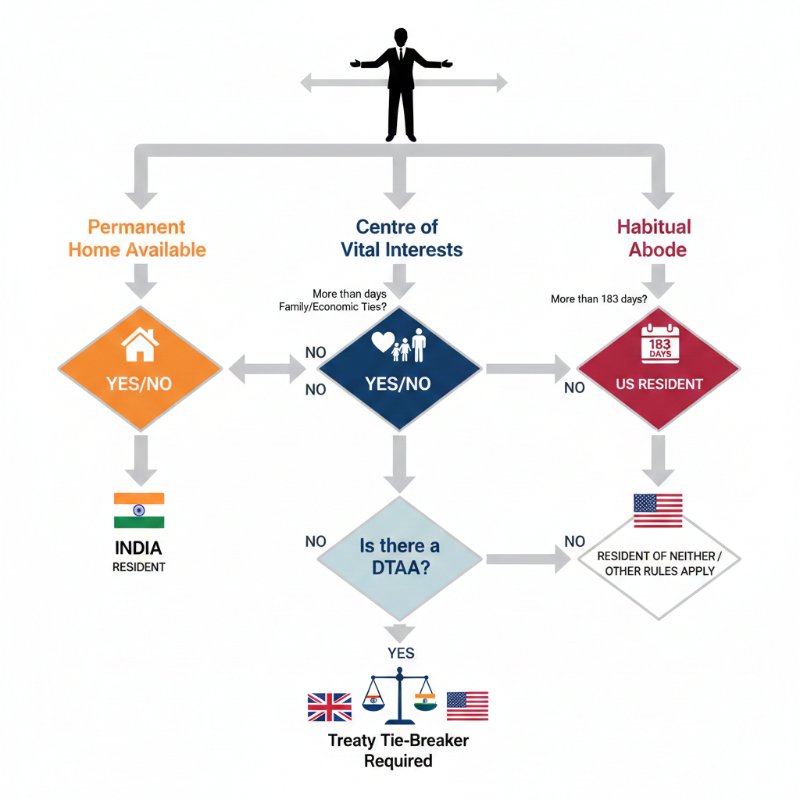
- They provide tie-breaker rules if two countries both consider you a tax resident
What You Can't Do Yourself:
While you can verify a DTA exists, interpreting how it applies to your specific situation requires professional expertise. Treaty articles are written in dense legal language and interact with domestic tax laws in complex ways.
This research is about understanding that relief might be available, not about claiming it yourself. That's what your tax specialist is for.
Step 5: Use Better Tools for Scenario Planning
Once you understand your situation and before you meet with your tax advisor, use tools that can help you model different scenarios. This makes your consultation more efficient and valuable.
What to Look For in Multi-Jurisdiction Tools:
Tax Year Awareness:
- Asks for your exact move date
- Models partial tax years in each country
- Understands different countries have different tax years
Tie Tracking:
- Lets you input family location, property availability, work ties
- Shows how these ties affect your residency determination
- Models the UK Statutory Residence Test or equivalent
Treaty Awareness:
- Indicates which DTAs might apply to your income sources
- Shows potential withholding rates vs. treaty rates
- Highlights where you might be able to claim relief
Multi-Currency Support:
- Tracks income and assets in multiple currencies
- Converts at appropriate rates for tax purposes
- Shows your complete financial picture across jurisdictions
Scenario Modeling:
- "What if I move in March vs. April?"
- "What if I sell my UK property before I leave?"
- "What if my spouse moves with me vs. stays for 6 months?"
This is exactly why we're building Settel—to provide the information and scenario modeling that standard calculators miss, without providing regulated tax advice. Think of it as a planning tool that helps you have much more informed conversations with your qualified tax professional.
Step 6: Prepare for Your Tax Advisor Meeting
When you finally meet with your cross-border tax specialist, maximize the value of that expensive hour by being prepared.
Bring:
- Your documented tax situation (from Step 1)
- Questions about specific scenarios
- Past tax returns from all relevant countries
- Any correspondence with tax authorities
- Information about upcoming life changes (moves, sales, job changes)
Ask:
- "Based on my ties, what's my likely residency status in each country?"
- "Are there any elections or claims I should make to optimize my position?"
- "How would my tax position change if I [specific scenario]?"
- "What are the filing deadlines in each jurisdiction?"
- "What's the consequence if I get this wrong?"
- "Should I be making estimated tax payments anywhere?"
Don't:
- Expect them to have perfect answers in the first meeting (complex situations take research)
- Try to handle the filing yourself to save money (the risk isn't worth it)
- Wait until just before the deadline to engage them
- Assume their advice applies forever (tax laws change, your situation changes)
Step 7: Set Up Proper Tracking Going Forward
Once you understand your tax position, you need systems to maintain accurate records going forward.
Track Daily:
- Where you are physically located (various tracking apps and tools are available for this purpose, such as TaxBird, MyExpatTaxes, and others - mentioned for illustrative purposes only, not as endorsements)
- Which country you're working in on work days
- Overnight stays in properties you own or have available
Track Monthly:
- Income received and from which sources
- Changes in family circumstances or property availability
- Investment income and which country it originated from
Review Quarterly:
- Your day count in each country
- Whether your ties have changed
- If you're on track with any planning strategies your advisor suggested
Why This Matters:
Multi-jurisdiction taxation isn't "figure it out once and you're done." Your residency status can change based on your daily actions. If your tax plan assumes you'll be non-resident because you're under 120 days with only 2 ties, and then you unexpectedly spend more time in your old country, you could accidentally trigger residency.
Good tracking helps you stay in control and make informed decisions throughout the year, not just at tax time.
Understanding the Value of Professional Expertise
Cross-border tax specialists' fees can be significant - comprehensive consultations and advisory work can vary widely in cost depending on complexity and the professional's experience. Some specialists offer initial consultations to help you understand whether their services are appropriate for your situation.
Consider this in context: professionals who rely on inadequate tools for complex multi-jurisdiction situations may face unexpected tax assessments. The cost of specialized expertise should be weighed against the potential risks of errors in complex tax positions.
The specialist's fee represents an investment in accurate compliance and peace of mind, though only you can determine what's appropriate for your circumstances and budget.
What Settel Does (And Doesn't Do)
We built Settel because we saw this gap: the space between "generic calculator that ignores complexity" and "expensive specialist consultation."
What Settel provides:
- Information and tracking tools for multi-jurisdiction tax situations
- Scenario modeling to understand "what if" questions
- A clear view of your tax position across countries, currencies, and tax years
- The data and clarity you need to have efficient conversations with your tax advisor
What Settel doesn't provide:
- Tax advice or recommendations
- Tax return preparation or filing
- Legal interpretation of treaties or regulations
- A replacement for your qualified tax professional
Think of it as the preparation layer. We help you understand your situation clearly so that when you do pay for specialist advice, you're asking the right questions and getting more value from every minute.
Similar to how Finary helps you track wealth across borders, we help you understand your tax position across jurisdictions—then you work with professionals to make the right decisions.
Your Next Steps
If you've discovered your tax calculator isn't up to the task:
- This week: Document your situation using the framework in Step 1
- This month: Determine if you genuinely have a Three-Country Problem (Step 2)
- Within 30 days: Find and vet cross-border tax specialists (Step 3)
- Before your tax year ends: Have an initial consultation and develop a strategy
- Ongoing: Set up proper tracking systems (Step 7)
Don't wait until tax filing season when specialists are overbooked and you're making decisions under pressure.
The gap between what your calculator says and what your tax office expects can be significant. But it's not insurmountable. It just requires the right expertise, the right tools, and accurate information.
Join the Settel waitlist to get early access to tools built specifically for multi-jurisdiction professionals—so you can approach your tax situation with clarity, not guesswork.
FAQ: Taking Action on Multi-Jurisdiction Tax Issues
How much does a cross-border tax specialist typically cost?
Cross-border tax specialists typically charge £150-400 per hour or £1,000-5,000+ for comprehensive advisory work depending on complexity. Big 4 firms are generally more expensive than boutique specialists. While this seems costly, it's usually far less than the potential tax bills, penalties, and interest from getting multi-jurisdiction taxation wrong. Many specialists offer initial consultations at reduced rates to assess your situation.
Can I handle multi-jurisdiction tax filing myself?
While it's legally possible to file your own taxes in multiple jurisdictions, it's rarely advisable for complex multi-country situations. The interaction between different countries' tax laws, residency tests, and treaty provisions creates risks that most individuals aren't equipped to navigate. Even small mistakes can trigger audits, penalties, or double taxation. The cost of professional help is typically far less than the cost of errors.
What's the difference between a regular accountant and a cross-border tax specialist?
A regular accountant is expert in one country's tax system and can accurately file returns for residents of that country. A cross-border tax specialist has expertise in multiple countries' tax systems, understands Double Taxation Agreements, and can navigate complex residency questions. If you have a Three-Country Problem, a regular accountant may not recognize issues they're not trained to see, while a specialist is specifically equipped to handle multi-jurisdiction complexity.
How long does it take to resolve a multi-jurisdiction tax situation?
Initial clarity on your tax position typically takes 1-3 consultations with a specialist over a few weeks. However, filing in multiple jurisdictions, claiming treaty benefits, or resolving dual residency issues can take several months, especially if you need to coordinate with tax authorities in different countries. Starting early in your tax year (rather than waiting until filing deadline) gives you more time for strategic planning.
Should I use tax software or hire a professional for multi-jurisdiction taxes?
For true multi-jurisdiction situations (earning, living, and owing across multiple countries), specialized professional help is strongly recommended over generic tax software. Standard software isn't designed to handle the complexity of residency tie-breaker rules, split-year treatment, or treaty elections. However, tax planning tools like Settel can complement professional advice by helping you track your situation and model scenarios between consultations with your qualified tax advisor.
What happens if I've already filed incorrectly?
If you've filed taxes without properly accounting for multi-jurisdiction complexity, you can typically amend returns in most countries. The timing and process varies by jurisdiction, and there may be penalties for late payment (though often reduced if you voluntarily amend). Engaging a cross-border specialist to help you amend returns and establish proper filing going forward is advisable. The sooner you address it, typically the better the outcome.
**Disclaimer:** The information provided in this article is for general educational purposes only and should not be construed as tax, legal, or financial advice. Tax laws and regulations are complex, vary by jurisdiction, and are subject to change. The examples and cost ranges provided are approximate and for illustrative purposes only. Individual circumstances vary significantly, and what applies to one person may not apply to another. Settel provides information and planning tools but does not provide tax, legal, or financial advice. We strongly recommend consulting with qualified tax professionals, accountants, or legal advisors who are familiar with the specific tax laws and treaties relevant to your situation before making any decisions or taking any actions based on this information.
Related Topics: Cross-border tax specialist, multi-jurisdiction tax planning, international tax advisor, expat tax help, Double Taxation Agreement guidance, tax residency determination, multi-country tax filing
Tags: #MultiJurisdictionTax #CrossBorderTax #TaxSpecialist #ExpatTax #ThreeCountryProblem #TaxPlanning #InternationalTax