UAE tax system explained: 5 facts expats must know

You've heard the UAE is a tax haven. Zero income tax, right? That's partly true, but the reality is more nuanced. Many expats arrive expecting no tax obligations whatsoever, only to encounter VAT, excise duties, and complex global reporting requirements. Understanding how the UAE tax system actually works can save you thousands and keep you compliant across borders. This guide breaks down VAT mechanics, income tax implications, recent 2026 rule changes, and practical strategies to optimize your financial position as an expat or digital nomad in the Emirates.
Table of Contents
- Key takeaways
- Understanding the UAE tax system basics
- Comparing UAE tax benefits versus high-tax countries
- Navigating compliance and reporting as an expat in UAE
- Strategies for optimizing your tax and financial position in the UAE
- Managing your expat taxes and wealth with Settel
- Frequently asked questions
Key Takeaways
| Point | Details |
|---|---|
| No personal income tax | Most expats do not pay a local income tax, increasing take home pay. |
| VAT at 5 percent | Value added tax applies to most daily purchases and services. |
| 2026 VAT changes | The 2026 VAT changes simplify compliance for residents by removing self invoicing under reverse charge. |
| Corporate tax scope | Only large multinationals fall under it, not individual expats. |
Understanding the UAE tax system basics
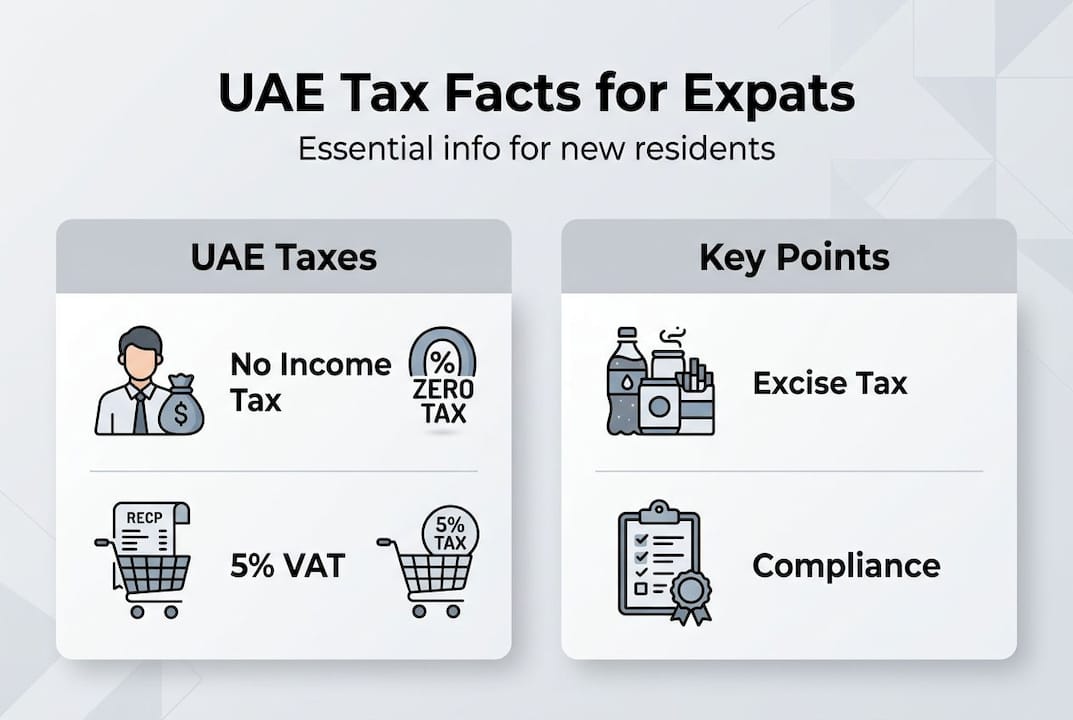
The UAE tax environment differs fundamentally from most Western countries. There's no personal income tax for the vast majority of expats, which means your salary arrives in full without withholding. This 0% personal income tax rate is the primary draw for globally mobile professionals seeking to maximize take-home pay.
However, the UAE does collect revenue through other mechanisms. VAT was introduced in 2018 at a standard rate of 5%, applying to most goods and services you purchase daily. Whether you're buying groceries, dining out, or paying for utilities, that 5% adds up. The 2026 VAT procedural simplifications removed requirements like self-invoicing under reverse charge, streamlining compliance for residents and businesses alike.
Excise taxes target specific products for public health reasons. Sugary drinks face tiered rates based on sugar content, while tobacco and energy drinks carry higher duties. These selective taxes rarely impact your overall financial picture significantly but are worth noting if you regularly consume these products.
The 15% corporate tax on large multinational entities under the Domestic Minimum Top-Up Tax framework affects corporations with global revenue exceeding specific thresholds. This doesn't touch typical expats, freelancers, or small business owners. Your expat asset protection strategies should focus on VAT and global reporting, not corporate tax obligations.
Here's what matters for your day to day financial planning:
- VAT at 5% applies to most purchases, from retail goods to professional services
- Excise taxes add cost to sugary beverages, tobacco, and energy drinks with tiered health-focused rates
- Zero personal income tax means your employment income isn't taxed locally
- Corporate tax obligations fall on large multinationals, not individual expats or small enterprises
- 2026 rule changes simplified VAT procedures, eliminating certain administrative burdens
Understanding these components helps you budget accurately and avoid surprises. The absence of income tax creates substantial savings, but VAT and excise duties represent ongoing costs that affect your monthly expenditure. Planning around these realities ensures you maximize the financial benefits of UAE residency while staying compliant.
Comparing UAE tax benefits versus high-tax countries
The financial advantage of relocating to the UAE becomes crystal clear when you run the numbers against high-tax jurisdictions. Consider an expat earning $150,000 annually who moves from Germany to Dubai. Germany's personal income tax rate hits 47.5% at this income level, while the UAE charges 0%.

In Germany, that $150,000 salary faces approximately $71,250 in income tax before social contributions. In the UAE, you keep the entire amount, minus only the 5% VAT you pay on consumption. If you spend roughly 40% of your income on VAT-eligible goods and services, that's about $60,000 in annual spending subject to VAT, costing you $3,000. Your net savings by relocating to the UAE total around $68,250 annually.
This comparison assumes similar living costs, which isn't always accurate. Dubai can be expensive for housing and international schooling, potentially offsetting some tax savings. However, the fundamental math remains compelling for most professionals.
| Country | Annual Income | Income Tax Rate | Income Tax Paid | Net After Tax | VAT/Consumption Tax | Estimated Annual VAT | Final Net Income |
|---|---|---|---|---|---|---|---|
| Germany | $150,000 | 47.5% | $71,250 | $78,750 | 19% standard | ~$11,400 | $67,350 |
| UAE | $150,000 | 0% | $0 | $150,000 | 5% standard | ~$3,000 | $147,000 |
| Savings | - | - | $71,250 | $71,250 | - | $8,400 | $79,650 |
The financial impact of relocating from a high-tax country to the UAE delivers immediate cash flow improvements. You can redirect those savings toward investments, retirement accounts, or lifestyle upgrades that would be impossible under a 47.5% tax burden.
Pro Tip: Factor in global tax treaties when planning your move. Double taxation agreements between your home country and the UAE can prevent you from paying tax twice on the same income, but you need to understand residency tie-breaker rules and reporting obligations to claim treaty benefits correctly.
The UAE's tax structure rewards high earners disproportionately. The higher your income, the more you save by avoiding progressive income tax brackets. A $250,000 earner in Germany faces even steeper marginal rates, while the UAE resident still pays zero income tax regardless of earnings. This scalability makes the Emirates particularly attractive for senior executives, entrepreneurs, and specialists commanding premium compensation.
Navigating compliance and reporting as an expat in UAE
Zero personal income tax doesn't mean zero compliance obligations. As a UAE resident, you must understand VAT filing requirements if you operate a business or provide freelance services above certain thresholds. Businesses with annual taxable supplies exceeding AED 375,000 must register for VAT and file periodic returns, typically quarterly.
The 2026 VAT rule changes simplified several procedures. You no longer need to issue self-invoices under reverse charge mechanisms for certain transactions, reducing administrative overhead. However, you still need to track VAT on purchases and sales, maintain proper records, and submit returns by deadlines to avoid penalties.
Here's your compliance roadmap:
- Determine if your business activity requires VAT registration based on annual revenue thresholds
- Register with the Federal Tax Authority if you exceed the mandatory registration limit
- Implement accounting systems that track VAT collected and paid on transactions
- File quarterly VAT returns by the 28th of the month following the tax period
- Maintain detailed records for seven years as required by UAE tax law
- Monitor 2026 rule updates that may affect filing procedures or exemptions
Beyond UAE-specific obligations, you must consider global tax reporting. Many expats maintain financial ties to their home countries through property ownership, investment accounts, or pension funds. These assets may trigger reporting requirements even while you're a UAE resident.
Double taxation avoidance agreements play a crucial role here. The UAE has signed DTAAs with over 130 countries, establishing rules for which country can tax specific income types. Understanding these treaties prevents you from paying tax twice on the same earnings and clarifies your reporting obligations to each jurisdiction.
Staying compliant with both UAE and global tax requirements isn't optional. Penalties for late or incorrect reporting can reach 75% of unpaid tax in some jurisdictions, turning a simple oversight into a financial disaster.
Pro Tip: Set up a global tax reporting system that tracks deadlines across all jurisdictions where you have obligations. Missing a filing deadline in your home country because you assumed UAE residency eliminated all responsibilities is a common and costly mistake.
The practical benchmark shows that relocating from a high-tax country delivers substantial savings, but only if you maintain proper compliance. The UAE won't tax your income, but your home country may still consider you a tax resident if you don't meet specific criteria for breaking residency ties. Each jurisdiction has unique rules about physical presence, property ownership, and economic ties that determine tax residency status.
Tracking these requirements manually becomes overwhelming when you're managing obligations across multiple countries. You need systems that alert you to upcoming deadlines, calculate estimated tax liabilities under different scenarios, and help you optimize your position within legal boundaries. The complexity isn't a reason to avoid the UAE, it's a reason to approach compliance strategically from day one.
Strategies for optimizing your tax and financial position in the UAE
Maximizing the UAE's tax advantages requires intentional planning beyond simply moving and enjoying zero income tax. You can implement specific strategies that compound your savings and protect your wealth across borders.
Start by restructuring your income sources to take full advantage of the 0% personal income tax environment. If you're self-employed or run a business, consider how you draw income. Salary, dividends, and capital gains each have different tax treatments in various jurisdictions. In the UAE, all three typically face zero personal tax, but your home country may view them differently under treaty rules.
Optimize your VAT expenses by understanding what qualifies for input tax credits if you operate a business. You can reclaim VAT paid on business purchases against VAT collected on sales, reducing your net VAT liability. Proper categorization and documentation of business versus personal expenses becomes critical here.
Leverage global tax treaties strategically. If you maintain income sources in treaty countries, understand which country has primary taxing rights under the agreement. Some treaties allocate taxation based on where services are performed, while others focus on residency or source of payment. Knowing these rules helps you structure activities to minimize total tax across jurisdictions.
Key optimization strategies include:
- Maximize retirement contributions in tax-advantaged accounts before relocating, as UAE residency may limit future contribution eligibility
- Time asset sales to occur during UAE residency when capital gains face zero local tax
- Structure business operations to take advantage of UAE free zone benefits if applicable
- Maintain proper documentation of residency status to support treaty claims in other jurisdictions
- Review and update beneficiary designations on accounts to reflect current residency and estate planning needs
| Factor | UAE | High-Tax Country (e.g., UK) | Complexity Level |
|---|---|---|---|
| Personal income tax | 0% | 20-45% progressive | Low |
| Capital gains tax | 0% (individuals) | 10-20% | Low |
| VAT/Sales tax | 5% standard | 20% standard | Medium |
| Global reporting | Required for foreign accounts | Required for foreign accounts | High |
| Treaty navigation | Essential for multi-country income | Essential for multi-country income | High |
| Compliance burden | Moderate (VAT if applicable) | High (income, capital gains, reporting) | Medium to High |
The 15% corporate tax under the Domestic Minimum Top-Up Tax framework targets large multinational enterprises with substantial global revenue. This doesn't affect typical expats, freelancers, or small business owners. The UAE remains exceptionally favorable for individual tax planning, and the corporate tax implementation actually reinforces the country's commitment to international tax standards while protecting the expat-friendly environment.
Pro Tip: Work with financial advisors who specialize in expat taxation across your specific country corridor. A UK tax advisor may not understand US tax obligations for American expats in the UAE, and vice versa. You need expertise that spans all jurisdictions where you have financial ties.
Protecting assets internationally requires understanding how different countries treat foreign trusts, corporations, and investment vehicles. Some structures that work well for tax optimization in one country trigger adverse tax consequences in another. Your asset protection strategy must account for the interaction between UAE residency and your home country's rules.
Currency management becomes another optimization lever. If you earn in USD, hold investments in GBP, and spend in AED, exchange rate fluctuations can significantly impact your real returns. Consider how you hold wealth across currencies and whether hedging strategies make sense for your situation. The UAE's currency peg to the USD provides stability for dollar earners but creates exposure for those with income in other currencies.
Finally, don't overlook the importance of proper record keeping. Tax authorities in your home country may scrutinize your UAE residency claim, especially if you maintain significant ties back home. Documentation proving your physical presence in the UAE, lease agreements, utility bills, and employment contracts all support your residency position. Without this evidence, you risk being deemed a tax resident of your home country despite living in the UAE, losing the tax benefits entirely.
Managing your expat taxes and wealth with Settel
Navigating the intersection of UAE tax benefits and global compliance obligations requires specialized tools built for your exact situation. Settel provides a multi-currency wealth and tax platform designed specifically for expats and digital nomads managing financial complexity across the US, UK, India, and UAE.
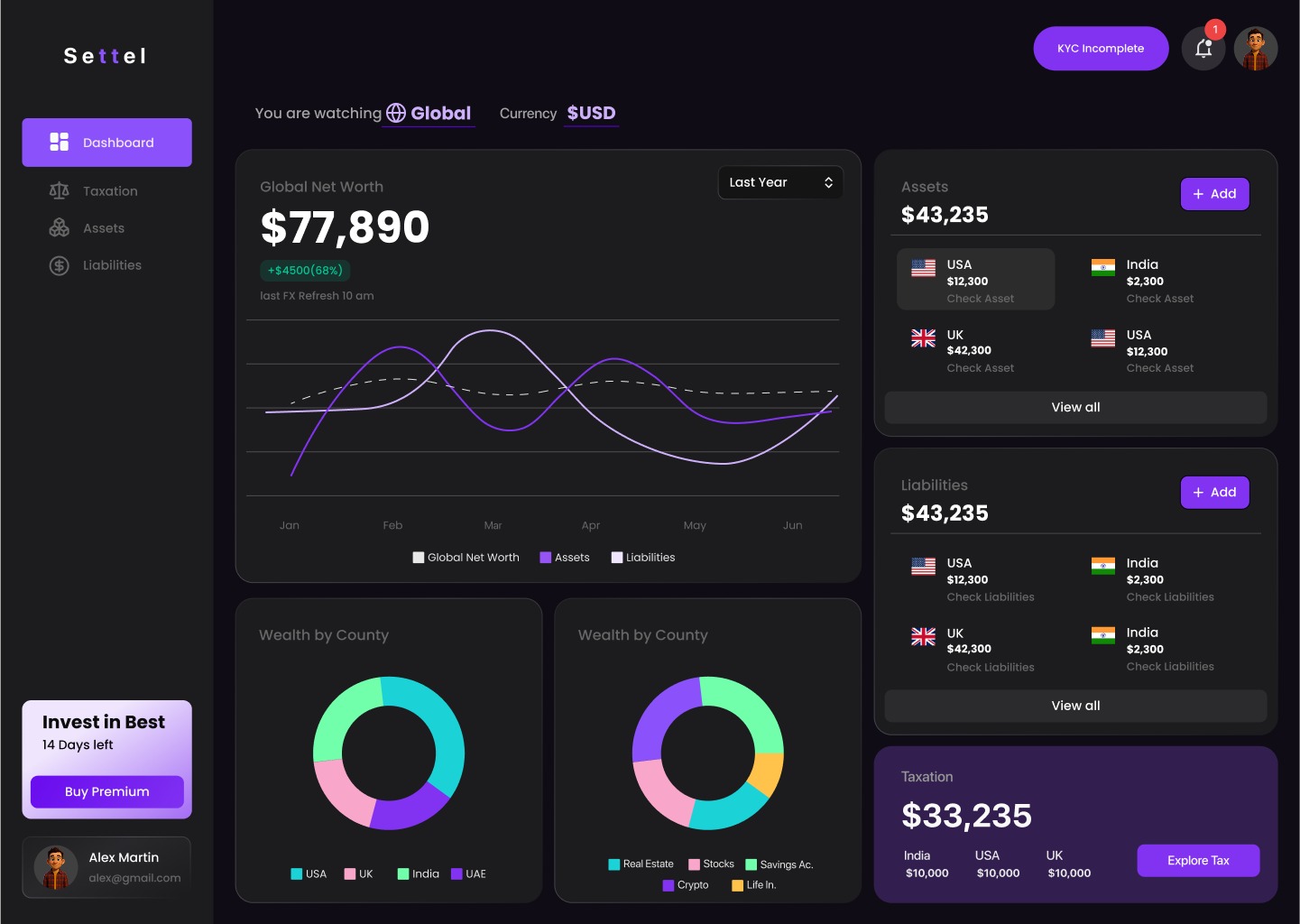
The platform consolidates your fragmented financial picture into a single dashboard, tracking bank accounts, investments, crypto, and property across countries while converting everything into your chosen base currency. The Smart Tax Engine analyzes your residency status, income sources, and applicable double taxation agreements to surface estimated tax obligations per country, helping you understand exactly what you owe and where.
Understanding global tax treaties and their application to your specific situation becomes straightforward with tools that model scenarios based on your actual financial data. Whether you're optimizing the timing of asset sales, evaluating the tax impact of a new income stream, or ensuring compliance across multiple jurisdictions, Settel provides the clarity you need to make informed decisions. Explore how Settel can simplify your expat financial management and keep you compliant without the weekend-ruining complexity.
Frequently asked questions
Do expats pay personal income tax in the UAE?
No, the UAE does not impose personal income tax on most expats. Your employment income, freelance earnings, and investment returns typically face zero local income tax, making it one of the most tax-efficient jurisdictions globally for individual earners.
What is the VAT rate in the UAE and what does it apply to?
The UAE charges a standard 5% VAT on most goods and services, including retail purchases, dining, utilities, and professional services. Certain items like basic food staples, healthcare, and education may be zero-rated or exempt, but the 5% rate applies broadly to daily consumption.
How do the 2026 VAT rule changes affect expats?
The 2026 VAT procedural simplifications removed requirements like self-invoicing under reverse charge mechanisms, reducing administrative complexity for businesses and residents. These changes streamline compliance without altering the fundamental 5% rate or scope of VAT application.
Do I still need to report taxes to my home country as a UAE resident?
Yes, many countries require tax reporting from citizens or former residents even after relocation. The US taxes citizens on worldwide income regardless of residence, while other countries use physical presence tests to determine tax residency. Understanding double taxation agreements and maintaining proper documentation is essential to avoid penalties.
Does the UAE corporate tax affect individual expats?
No, the 15% corporate tax under the Domestic Minimum Top-Up Tax framework targets large multinational enterprises with substantial global revenue. Individual expats, freelancers, and small business owners remain unaffected, preserving the UAE's favorable tax environment for most globally mobile professionals.
Recommended
- Expat Asset Protection: 5 Strategies with 100% Compliance | Settel Blog | Settel
- 3 Types of Global Tax Treaties: 90% of Nations Use DTAAs | Settel Blog | Settel
- Global Tax Reporting: Avoid 75% Penalties in 2026 | Settel Blog | Settel
- Settel Expats: Wealth Management & Tax for Expats in US, UK, UAE, India